
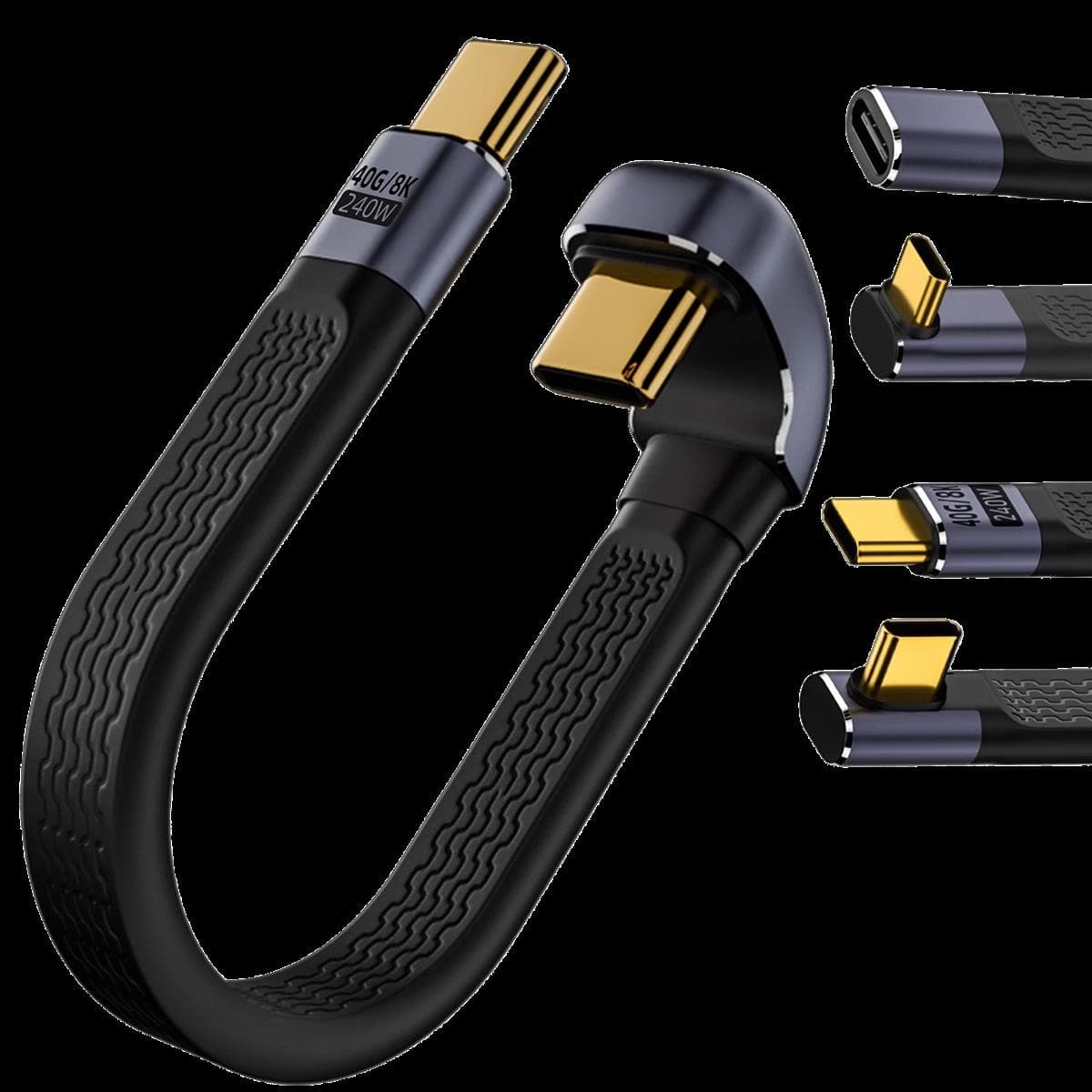
This article is for brands, private-label buyers and distributors of USB-C cables and chargers, especially those selling into the European Union. It covers the regulation and the market trend; the speed and power specifications themselves are compared in our article on USB4 versus USB 3.2. The connectors we supply are described on the USB Type-C connectors page.
1. What the policy is
The EU set out its common-charger solution in Directive (EU) 2022/2380, supported by Commission Delegated Regulation (EU) 2023/1717: USB-C becomes the unified charging port, and fast-charging technology is harmonised so that manufacturers cannot unreasonably limit charging speed. The legal basis is two amendments to the Radio Equipment Directive 2014/53/EU. The rationale is straightforward: consumers change a cable every time they change a device, chargers pile up in drawers, and electronic waste grows with them.
2. Scope and timetable
According to the European Commission, the rules apply from 28 December 2024 to these device categories:
- Mobile phones, tablets and digital cameras
- Headphones, earphones and portable speakers
- Handheld video-game consoles, e-readers, keyboards, mice and portable navigation devices
From 28 April 2026 the rules extend to laptops. The directive also requires unbundling — a device must be available without a charger — and a charging-information label (a graphic plus text).
3. What it means for cable procurement
- Demand concentrates on USB-C and USB PD. Once the port is unified, one cable has to fast-charge across brands, and devices may not throttle speed through a private protocol without good reason.
- Compliance points to the harmonised standards. The technical specifications cited by the directive — the EN IEC 62680 series, as cited in the Official Journal — are the basis for assessing conformity, so ask suppliers for the corresponding test reports.
- Unbundling creates a new opportunity. Cables and chargers can be sold separately, but the packaging and instructions must state the power and fast-charge support so buyers are not misled.
- Higher power depends on the e-marker. USB PD 3.1 reaches 240W over USB Type-C, and the Type-C specification Release 2.1 defines the 240W cable requirements (source: USB-IF). A high-power cable without an e-marker generally cannot negotiate its rated power.
4. Selection and sourcing points for buyers
- Define the use first: charging only, data, or video (Alt Mode / docking)
- Define the power: the device requirement decides whether an e-marker and a heavier gauge are needed
- Testing: USB-IF testing and a TID are not mandatory but reduce returns and after-sales cost
- Documents: datasheet and test reports, plus labelling and consumer information that meet the directive
- SKU planning: stock the device side and the accessory side separately, since chargers and cables sell independently
5. Supply-chain impact
With the port unified, demand for micro-USB and some proprietary interfaces contracts while USB-C SKUs concentrate. Three practical effects for brands:
- Buying: make USB-C the main line and keep old interfaces only as long-tail SKUs
- Packaging: EU-facing products must meet the unbundling and information-labelling requirements, so manuals and pack copy have to be updated with them
- Pricing: conformity testing enters the supplier-selection threshold, so compare quotes on compliant cost, not bare-cable cost
6. The next milestone to watch
Once laptops are covered from 28 April 2026, the cables shipped with devices into the EU will converge further on USB-C. Brands making laptop accessories, docking stations and travel chargers are best off completing their cable specifications and labelling before that date, rather than reworking in peak season.
7. Common misconceptions
- Thinking that a mandatory USB-C port means any Type-C cable will fast-charge — cable capability, e-marker and gauge all decide the result
- Handling the device rules only and ignoring the labelling rules for cables and chargers sold separately after unbundling
- Carrying old micro-USB stock straight into a new project
Two related reads: USB4 vs USB 3.2 for the speed and power grades, and 16-pin vs 24-pin USB-C cables for why a Type-C plug is not enough on its own.
Sources
- European Commission, one common charging solution for all: https://single-market-economy.ec.europa.eu/sectors/electrical-and-electronic-engineering-industries-eei/radio-equipment-directive-red/one-common-charging-solution-all_en
- USB-IF, USB Power Delivery: https://www.usb.org/usb-charger-pd
- USB-IF, specifications and documents: https://www.usb.org/documents