
Battery contacts
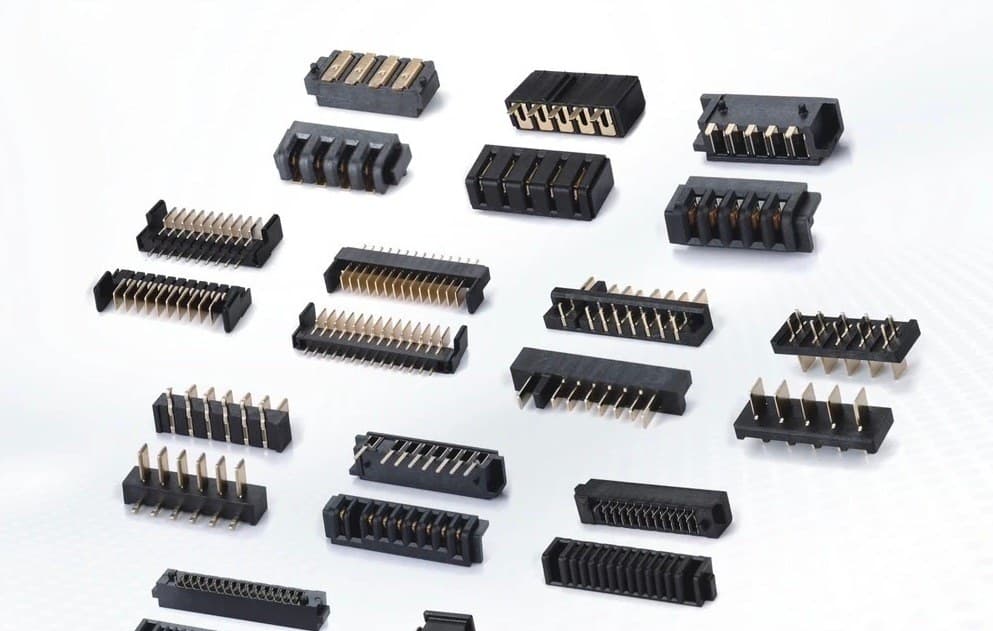
Blade battery connectors — flat contacts, low profile, 3 to 12 positions
A blade battery connector uses flat contacts instead of springs: the blade wipes against a mating tab, so the contact sits lower than a spring design and takes up less height inside the pack. These come from our Shenzhen plant in 3 to 12 positions, surface-mount, with the low profile that packs and compact devices need.
- 3 to 12 positions
- Flat blade contact design
- Surface-mount bodies
- Low overall height for compact packs
- Produced in our Shenzhen plant
Specification
Fixed parameters and open items
The factory material fixes the contact style, the position range and the mounting method. Ratings and cycle life depend on the variant, so they stay open until the datasheet is confirmed.
| Contact style | Flat blade |
|---|---|
| Position count | 3–12 |
| Mounting | SMD |
| Height | Low profile |
Blade versus spring: which one goes in the pack
The choice is mechanical before it is electrical. A spring contact tolerates a battery that floats in its compartment; a blade contact assumes the mating tab is guided and its position is controlled by the housing. If the pack has a fixed guide rail, the blade design gives a lower stack height. If the cell can shift, a spring is the safer choice.
Because both styles are made in the same plant, we can quote them against the same drawing and tell you which one the current tooling supports.
Position count and pack layout
The 3 to 12 position range covers the usual pack arrangements: series cells, parallel groups and the sense lines a battery management board needs. Position count drives the connector length, which in turn drives how much of the pack face it occupies.
Send the pack drawing with the terminal positions marked. If the tab spacing is not standard, say so early — that is a tooling question, not a catalogue question.
Assembly and soldering
SMD bodies are placed and reflowed with the rest of the board, which removes a hand-soldering step and keeps the joint consistent across a run. The reflow profile has to match the connector's own rating; ask for it with the sample rather than assuming the board profile is fine.
Where the pack is potted or wrapped after assembly, tell us: the housing material and the clearance around the contact may need to change.
What to send for a quotation
Position count, tab spacing, board thickness, the annual volume and whether the pack is potted. With those four we can name the variant, the tooling position and a realistic lead time.
FAQ
Questions buyers ask before ordering
- How many positions can a blade battery connector have?
- The standard range is 3 to 12 positions. Outside that, it becomes a tooling question — send the drawing and we will confirm feasibility.
- Is it surface-mount only?
- Yes, the standard blade series is surface-mount. If your assembly needs through-hole, tell us and we will check what the plant can offer instead of forcing an SMD part onto a THT board.
- How low is the profile?
- The exact height depends on the position count and variant, so it is quoted per part rather than as a series figure. Ask for the drawing of the position count you need.
- Can you supply a sample before tooling?
- Samples come from stock where the position count is standard. For a non-standard tab spacing, tooling has to be discussed first — we will not promise a sample date before the drawing is reviewed.
- Samples come from the plant that will run production
- Non-standard tab spacing or barrel size is a tooling question, quoted separately
- We will not promise a sample date before the drawing is reviewed
Send the drawing or the part number
We quote against your specification rather than a catalogue number. Include the application, the annual volume and any test report the buyer requires.