
Power input
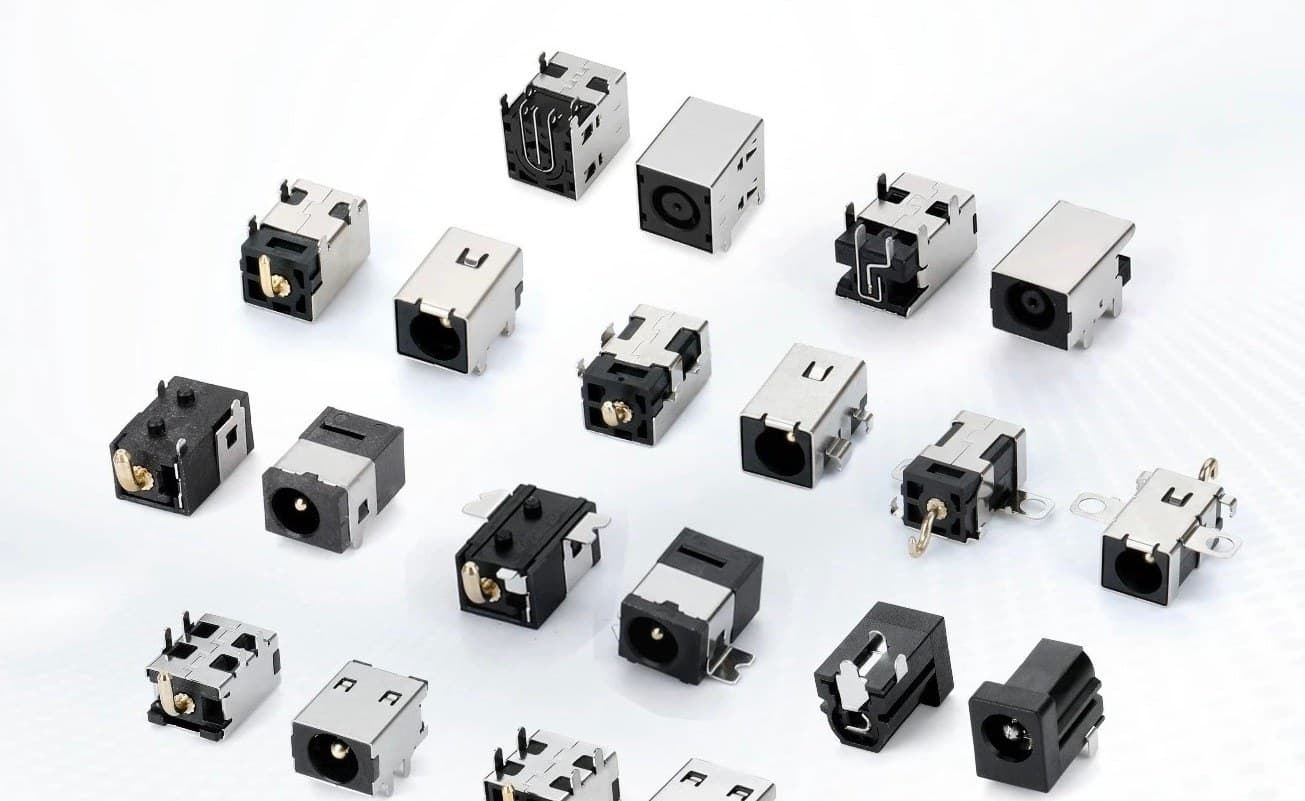
Horizontal DC power jacks — through-hole or SMD, shielded or open
A horizontal DC jack takes the barrel plug from an adapter and sits flat against the board, so the cable leaves the enclosure from the side. These are made in our Shenzhen plant in through-hole and surface-mount versions, with or without a shield can, and the shield is what carries the mechanical load when the plug is pushed in.
- Horizontal orientation, cable exits sideways
- Through-hole and surface-mount versions
- Shielded and unshielded bodies
- Centre pin and switching-contact variants
- Produced in our Shenzhen plant
Specification
Fixed parameters and open items
Barrel diameter, pin length and current rating vary by part, and the factory material lists the family rather than one part number. Ask for the drawing of the size you need.
| Orientation | Horizontal |
|---|---|
| Mounting | Through-hole or SMD |
| Shield | With or without shield can |
| Switching contact | Available |
Which barrel size you actually need
The plug decides the jack: outer diameter, inner pin diameter and barrel length have to match the adapter the product ships with, and a 0.1 mm difference is the difference between a firm fit and an intermittent connection. Measure the plug, not the old jack.
If the product ships with its own adapter, send the adapter's plug drawing. If the customer supplies the adapter, ask which standard they use before locking the jack.
Why the shield matters mechanically
A shielded jack transfers the insertion force to the shield can and then to the board through its tabs, so the plastic body is not the only thing holding the plug. On a device that is plugged in most of its life, that is the difference between a stable contact and a cracked housing.
The unshielded version costs less and is fine where the plug is inserted occasionally and the enclosure itself supports the jack.
Through-hole or surface-mount
Through-hole jacks survive more insertion force because the pins go through the board; SMD jacks suit a fully automated line and thinner boards. Where the jack is the only mechanical interface on the product, think about the insertion force before choosing SMD for convenience.
Both are made in the same plant, so the choice can follow the assembly line rather than the supplier.
What to send for a quotation
Plug dimensions, mounting type, shielded or not, whether a switching contact is needed, board thickness and annual volume. With those we can name the variant and confirm the tooling status.
FAQ
Questions buyers ask before ordering
- Can you match a specific barrel plug?
- Yes — send the plug drawing or the adapter datasheet. Outer diameter, inner pin and barrel length all have to match, so we quote against the plug rather than against a generic size.
- Do you offer a shielded version?
- Both shielded and unshielded bodies are available. The shield carries the insertion load, which matters on a device that stays plugged in.
- Is there a switching contact for battery detection?
- A switching contact variant exists; confirm it for the specific size you need. It is used to disconnect the battery when the adapter is plugged in.
- What is the rated current?
- It is set by your drawing - it depends on the barrel size and the contact design, so a single series figure would be misleading. Tell us the barrel you need and we will quote the current for it.
- Samples come from the plant that will run production
- Non-standard tab spacing or barrel size is a tooling question, quoted separately
- We will not promise a sample date before the drawing is reviewed
Send the drawing or the part number
We quote against your specification rather than a catalogue number. Include the application, the annual volume and any test report the buyer requires.