
A distributor in Jakarta wins a rural FTTH rollout. Six months later, roughly a quarter of the drop cords come back: the jackets are chewed through, the fibers inside are broken, and the operator is asking for replacements under warranty. The cords were standard 3.0 mm LSZH simplex, correctly terminated and tested on delivery. The problem was never quality — it was the wrong construction for the environment.
That is the conversation this article is meant to prevent. Armor is not an upsell and it is not a universal upgrade. It solves four specific field problems, and if your project does not have those problems you should not be paying for it. Here is how to decide.
What “armored” actually means
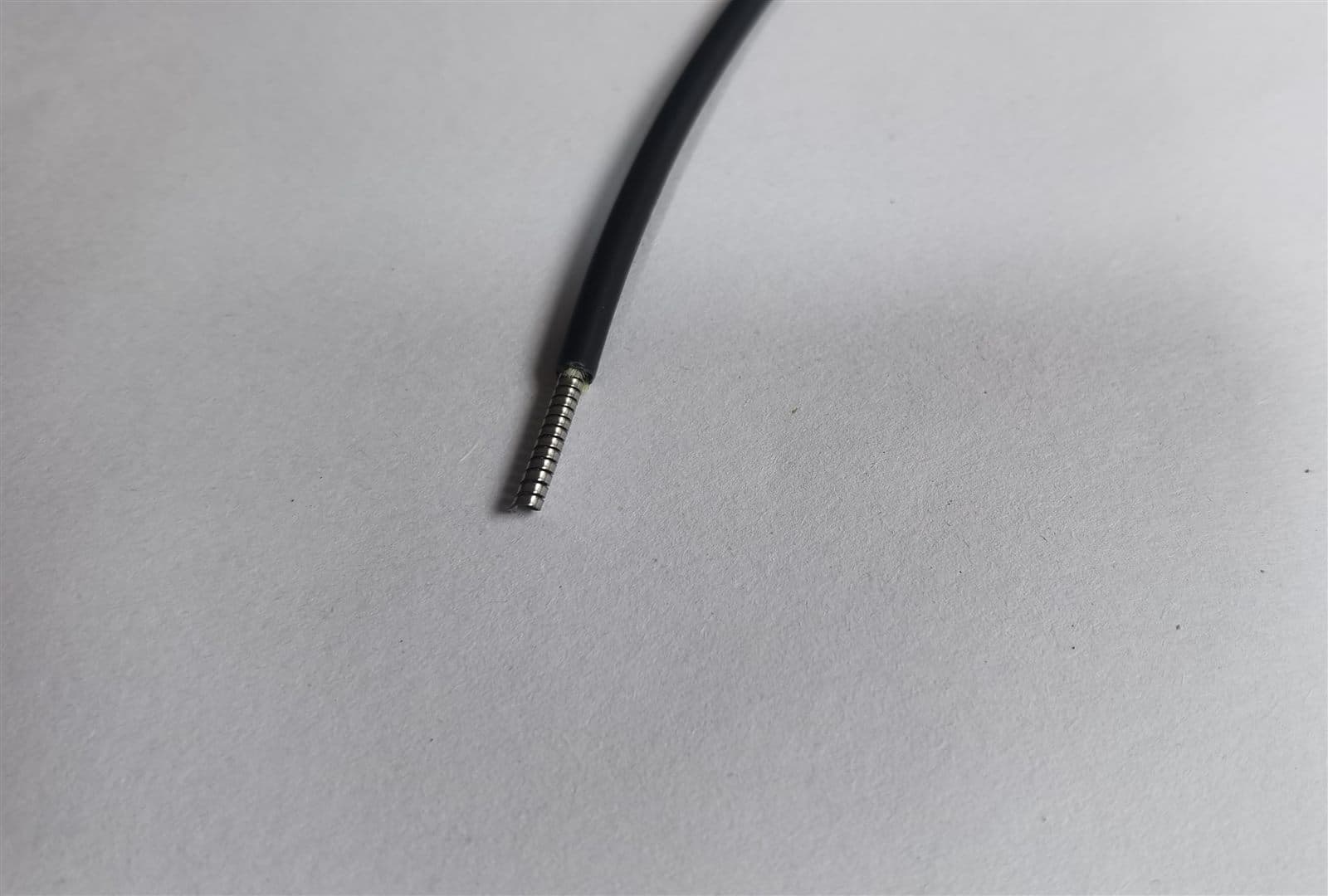
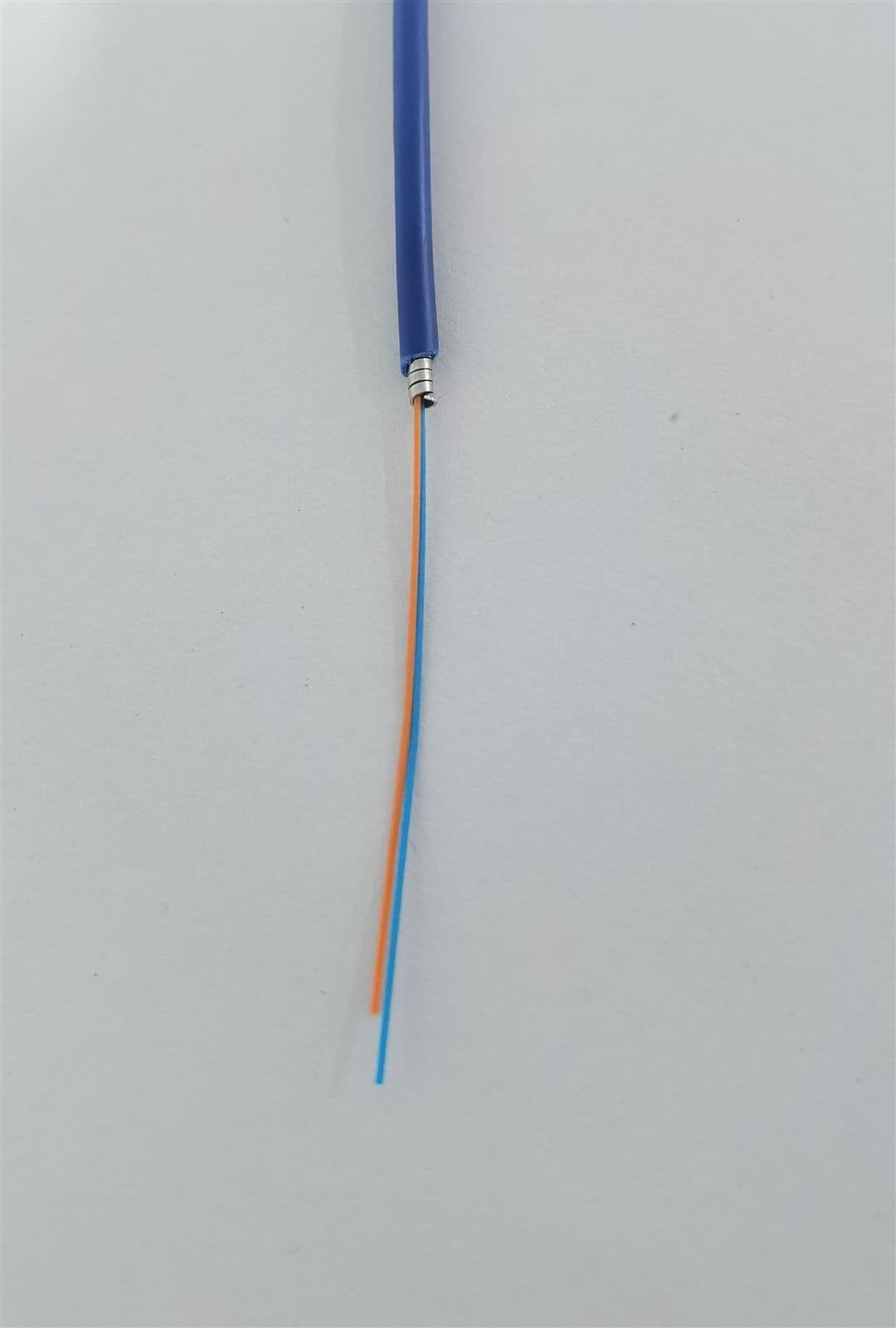
An armored patch cord has the same optical core as a standard one. Between the tight-buffered fiber and the outer jacket, however, sits a flexible corrugated stainless steel tube — the armour. Around it you will usually find aramid yarn for tensile strength, then the jacket you specify: LSZH, PVC or PE.
Because the armour sits outside the light path, it adds protection without adding optical loss. A well-made armored cord delivers the same insertion loss (≤0.3 dB in our production) and the same return loss figures as its standard equivalent. The connector assembly, the ferrule and the polish are identical — which is why an armored cord is quoted as a construction option, not as a separate product family.
Four situations where armor pays for itself
Armor costs more per cord. Whether that premium is justified comes down to a single question: will anything in the installation environment threaten the fiber over the life of the network?
1. Outdoor and aerial runs
Aerial drop cords and outdoor cabinet links live in wind, UV and temperature cycling. The bigger risk is mechanical: during installation the cord is pulled over duct edges, tied to a messenger wire, and occasionally stepped on. Armor spreads those point loads instead of passing them to the fiber.
2. Rodents
In rural FTTH this is the single largest cause of premature failure, and it is not limited to any one region. Rodents chew jackets — not because the cable is tasty, but because their teeth grow continuously. A standard LSZH jacket is a few seconds of work. A stainless steel tube is not, and in practice the damage stops at the armour.
3. Industrial and heavy-vibration sites
Factory floors, tunnels, mining and energy sites combine vibration, swarf, chemicals and people in a hurry. Armored cords used for industrial Ethernet links, camera feeds and control cabinets survive conditions that reduce ordinary cords to consumables.
4. Cabinet and cable-tray routing
Even indoors, the failure is often mechanical. Cords routed through trays get pinched by ties and dragged across metal edges; cords inside cross-connect cabinets get kinked behind doors. Armor protects against the crush loads that cable management generates on its own.
Armored vs standard, side by side
| Property | Standard patch cord | Armored patch cord |
|---|---|---|
| Construction | Jacket + strength members + fiber | Jacket + stainless steel tube + strength members + fiber |
| Rodent resistance | Low | High |
| Crush / point-load resistance | Low to moderate | High |
| Minimum bend radius | Smaller — easier to dress tightly | Slightly larger — allow for the tube |
| Typical outside diameter | 2.0 mm or 3.0 mm | 3.0 mm and up |
| Insertion loss | ≤ 0.3 dB | ≤ 0.3 dB — no optical penalty |
| Cost per cord | Lower | Higher |
| Best fit | Indoor patch panels, data halls | Outdoor, aerial, industrial, rodent-prone routes |
What armor does not fix
It is worth being equally clear about the limits. Armor is not a substitute for correct bend radii — every cable has a minimum, and a tight zip-tie can still damage a cord over time. It is not armour plate: a direct cut with a blade will still get through. It does not replace outdoor-rated cable where the run is long, buried or subject to water ingress. And it does not remove the need for a proper optical test — a cord can be mechanically perfect and optically out of specification.
If your deployment is entirely indoors, in a controlled data hall, with good cable management, standard cords remain the sensible choice.
How to specify an armored patch cord
Once you have decided on armor, the specification is the same six-line exercise as any patch cord. Send these values and you will get an exact price rather than a range:
- Connector — SC or LC are the volume options; FC and ST are available. Simplex or duplex, with hybrid combinations if one end differs.
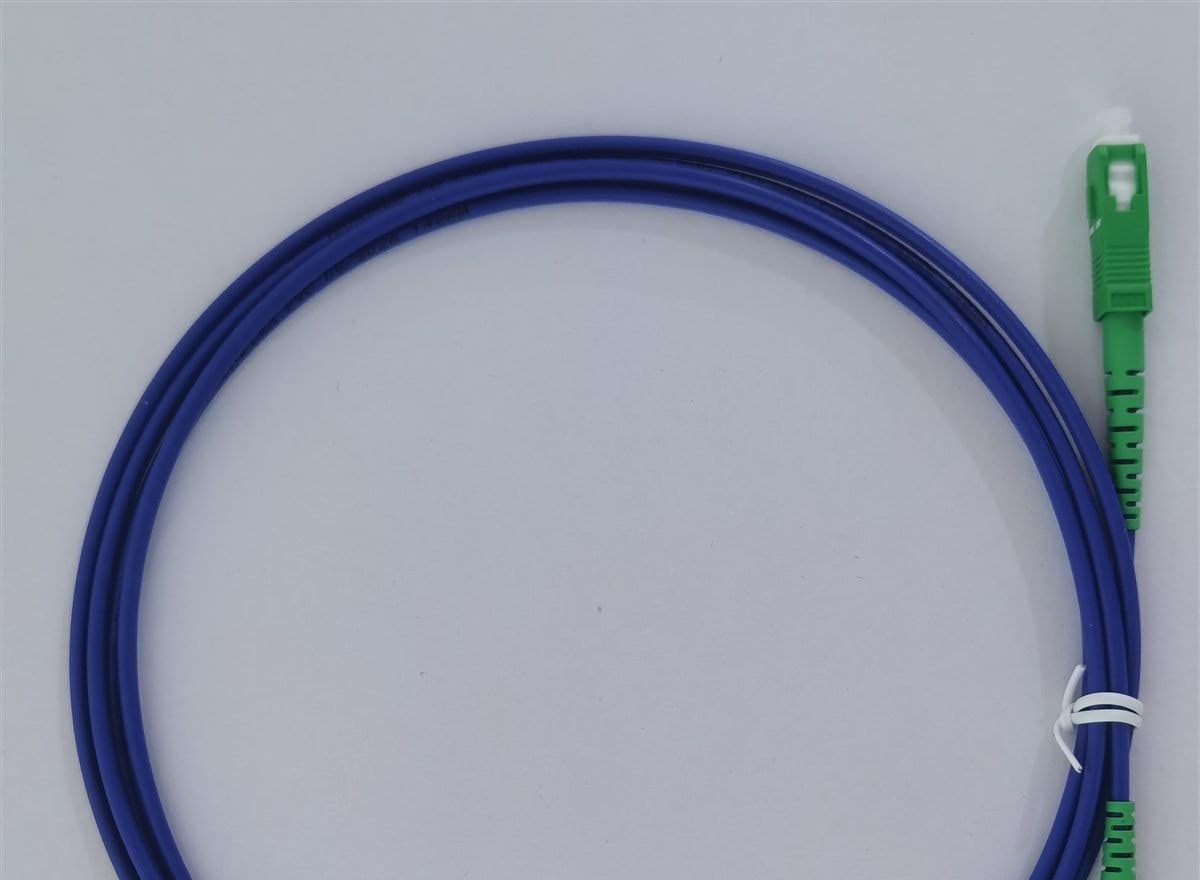
- Polish — APC (green, 8°) for FTTH and CATV; UPC (blue) for data-centre and telecom-equipment ports. Never mix the two on a mating pair.
- Mode — single mode OS2 for distances beyond roughly 300 m and all outdoor work; multimode OM3/OM4 inside a data hall.
- Jacket — LSZH for European and project work, PE for heavy outdoor duty.
- Length — made to order, with a tolerance you approve.
- Test limits — for example IL ≤ 0.3 dB and RL ≥ 60 dB for APC, with a report per order.
Full technical options for each construction are listed on our armored patch cord page, with the broader range on the fiber optic patch cord overview.
How we build and test them
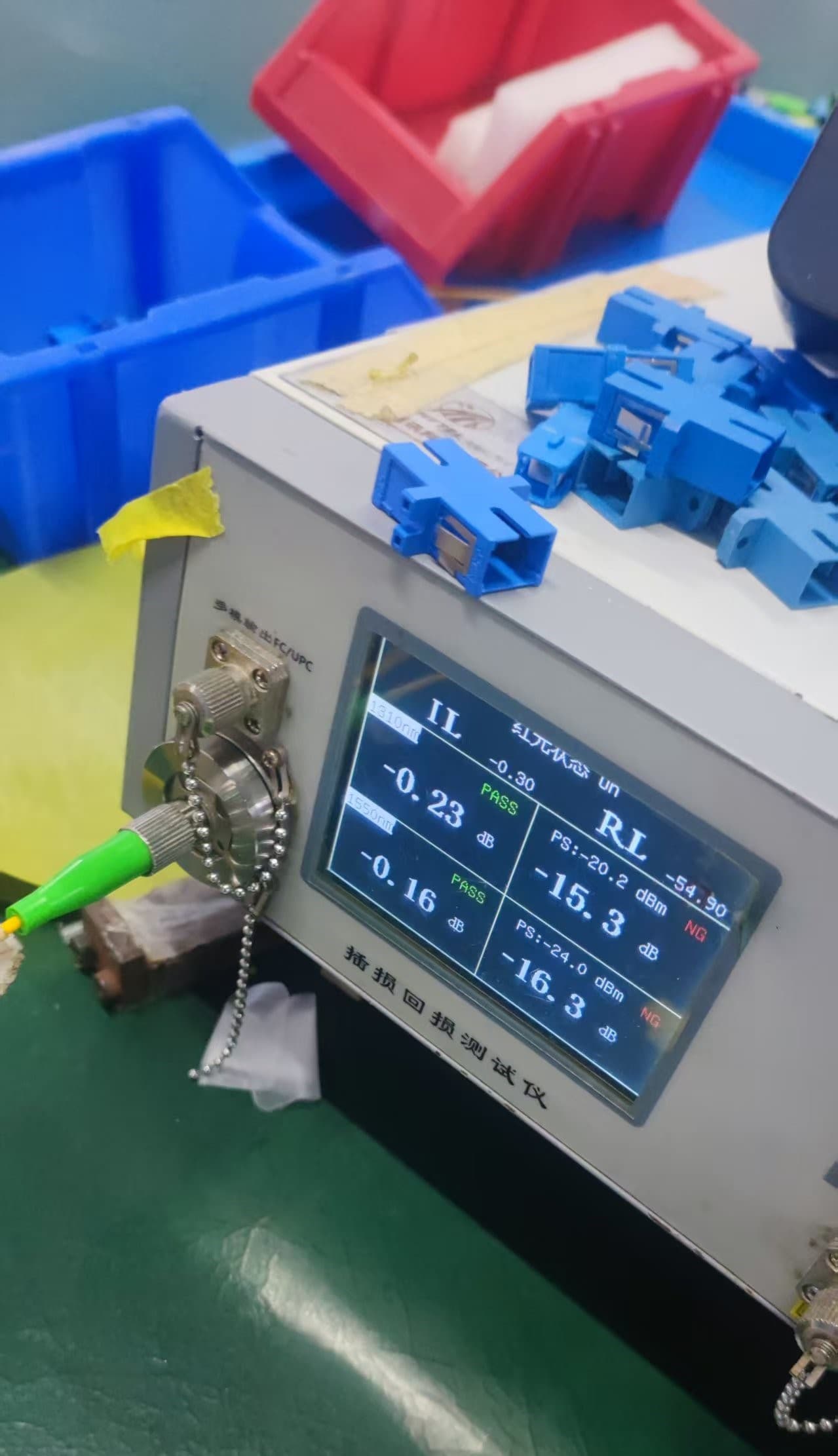
Our Jiangsu base produces armored cords on the same lines as our standard range, with the armour applied before the outer jacket and the connector assembly. Because the armour is invisible from outside, construction is verified with cutaway samples rather than by eye.
Every cord is measured for insertion loss and return loss before packing, and end-face geometry is checked with an interferometer on sampled and critical parts. The test report ships with the goods, so your incoming inspection has the numbers without re-testing the whole batch.
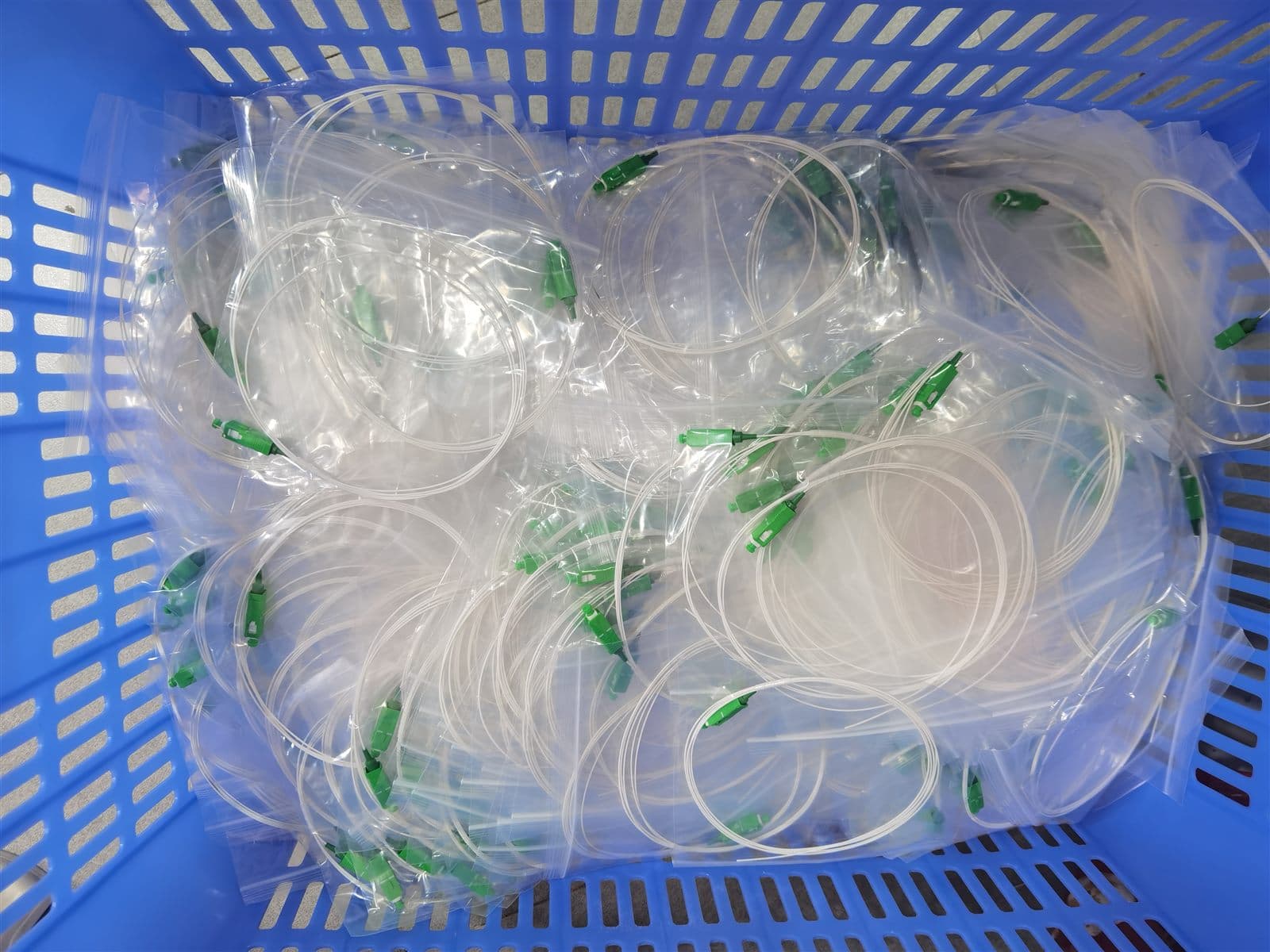
If you are sourcing armored cords for a distribution or contractor programme, the OEM process page covers tooling, lead times and how we handle repeat orders. And if you would rather just describe the project, send us the specification — connector, mode, polish, length and quantity is enough for us to quote, and no drawing or sample is needed.
You can reach our engineers at wangyazhong@hengchangtech.com or on WhatsApp +86 138 1667 2110. We reply to technical enquiries within one working day.