
APC and UPC connectors look almost identical on a shelf, and both are available with SC and LC housings. The difference is a few degrees of geometry — and it is the single most common specification error we see on incoming enquiries.
Flat versus angled
UPC (Ultra Physical Contact) ferrules are finished with a slight dome; the fiber end sits essentially perpendicular to the axis. APC (Angled Physical Contact) ferrules are polished at an 8° angle. That angle is the whole story: light reflected back from the end face is deflected into the cladding instead of travelling back up the fiber toward the laser.
The practical result is return loss. UPC connectors are specified at ≥ 50 dB; APC connectors reach ≥ 60 dB. For GPON, FTTH and CATV — where a weak reflection can disturb a shared downstream signal — that extra 10 dB matters.
Why you must never mix them
If you mate an APC connector with a UPC connector, the angled face meets a flat face. Contact is reduced to a small area or an air gap, and the two end faces can physically abrade each other. The result is high loss, unstable readings, and — often — permanent damage to the UPC side. This applies to adapters, patch panels and equipment ports alike. Colour coding exists for a reason: blue = UPC, green = APC.
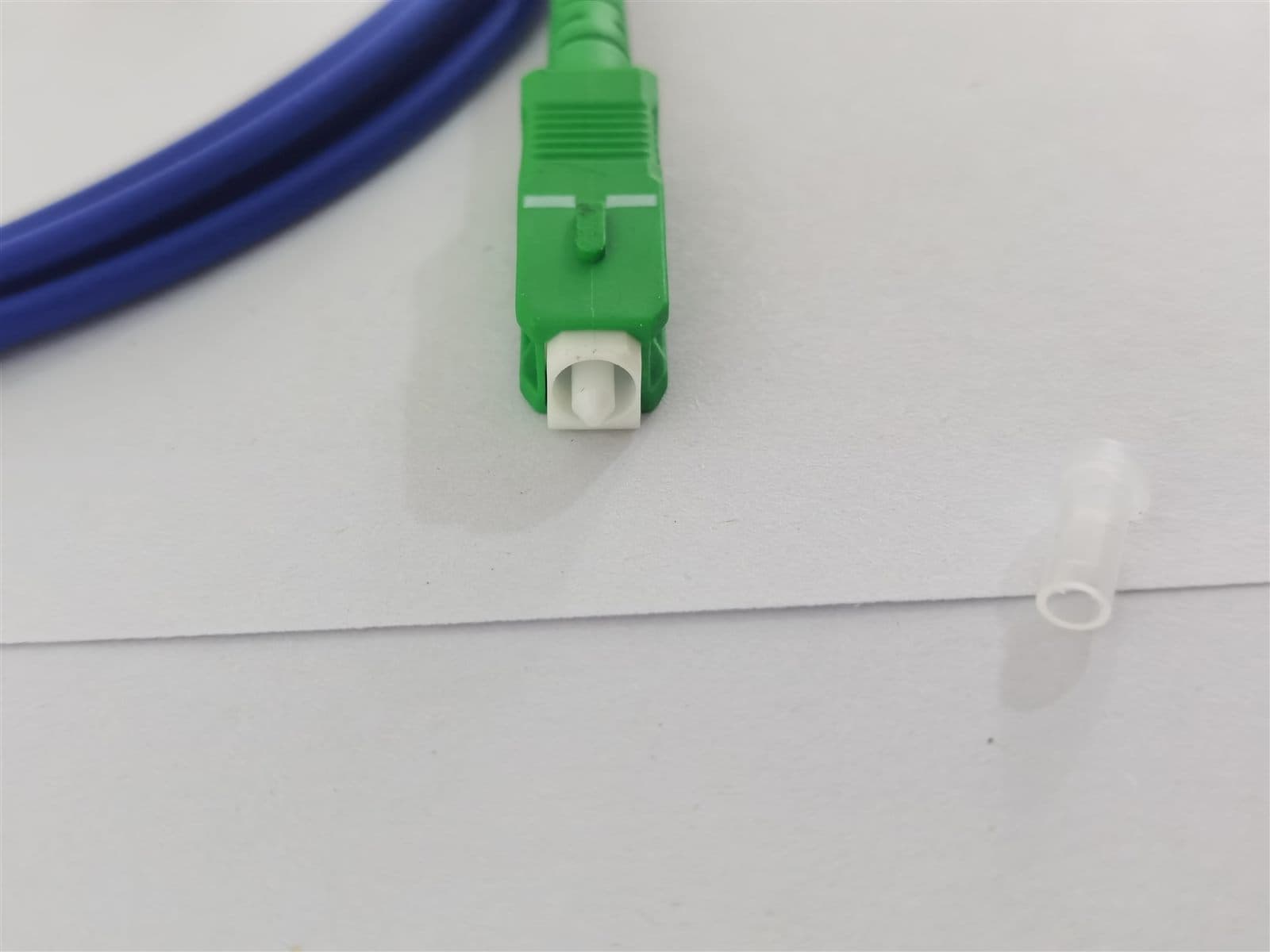
Which polish belongs where
| Property | UPC | APC |
|---|---|---|
| End-face | Flat, domed | 8° angled |
| Return loss | ≥ 50 dB | ≥ 60 dB |
| Housing colour | Blue | Green |
| Typical use | Data centres, telecom equipment, SFP/QSFP ports | FTTH, GPON, CATV, passive optical networks |
A simple rule for export markets: North American and European data-centre work is usually LC/UPC; FTTH user-side and CATV networks are almost always SC/APC. If your customer's network is a PON, assume APC until they tell you otherwise.
What to put on the purchase order
- Connector type and polish on each end — e.g. SC/APC.
- Mode — single mode OS2 or multimode OM3/OM4.
- Simplex or duplex, and whether a clip is required.
- Jacket — 2.0 mm, 3.0 mm, LSZH or armored.
- Length, and the test limits you will accept.
All of these are configurable on our fiber optic patch cord range; for outdoor and PON builds the stainless steel armored series is the usual choice. To get a price, send us the specification — no drawing is needed for a patch cord.
Questions on polish for a specific network? Write to wangyazhong@hengchangtech.com and an engineer will answer.